Skip to content

About Vitalya.

A practice built around a single belief.

“The right help at the right time prevents someone losing everything.”

if you only read this.

i.

Clinical mental health social work skills, applied to NDIS coordination.

ii.

Currently practising in acute inpatient mental health. I know your handover.

iii.

Honest about fit. If we are not the right team, you hear it the same business day.

Chapter I.

How Vitalya came to be.

A moment in a hospital ward changed what I wanted to do with my work.

My background did not start in social work. I worked in administration first, watching the systems around mental health and disability from the outside.

Then there was a moment. You see someone in pain. You ask a small question. Are you okay. Do you need anything. The person looks up, and something in their eyes changes. They feel seen. Heard. Not processed.

That moment is what moved me into the work. I went back to study, completed my Master of Social Work at ACAP, and built clinical experience inside acute inpatient mental health where I still practise part time today.

Working in the ward, I see what happens when help arrives too late. People lose their housing, their relationships, their capacity, sometimes their rights. And then they have to start from zero.

Vitalya was built to prevent that. To intervene clinically, before crisis. To make sure help arrives in the window when it actually changes the outcome. Not three weeks later. Not after the next admission.

The practice is small by design. I see every referral personally.
Chapter II.

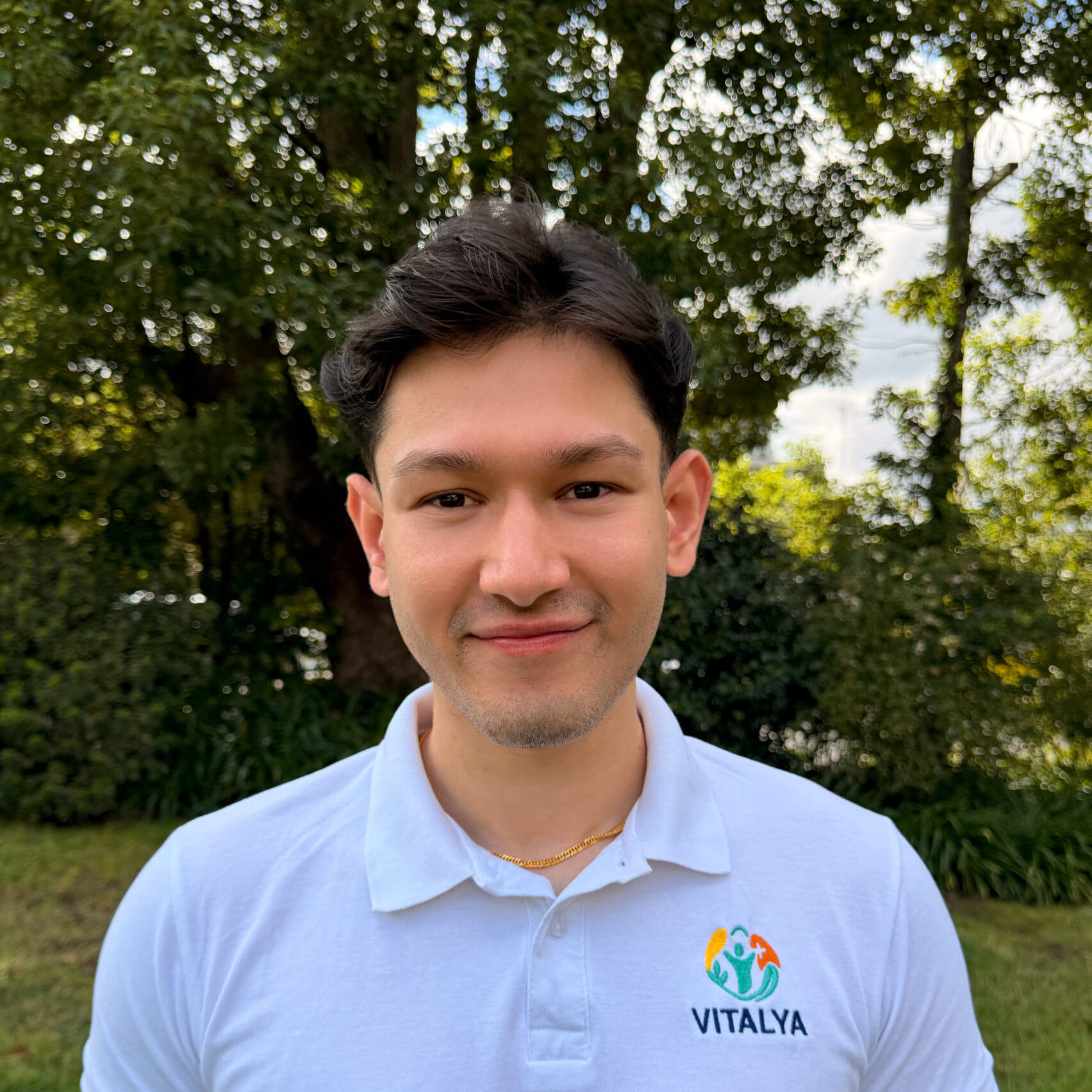
Ashish Sharma, founder of Vitalya, Accredited Social Worker

the practitioner.

Ashish Sharma.

Accredited Social Worker. Founder of Vitalya. Currently practising part time as a social worker in acute inpatient mental health.

  • Master of Social Work, ACAP
  • AASW Accredited Social Worker
  • Acute mental health practice ongoing
  • Three years prior NDIS roles
  • NDIS Provider 4050173484
  • Sydney based, telehealth first

why these matter.

AASW Accreditation is not a tick box

Most NDIS coordinators come from disability support, allied health assistant, or admin backgrounds. AASW Accreditation requires Master of Social Work qualification and ongoing adherence to a strict, enforceable Code of Ethics. The difference shows up in every coordination decision.

Current acute mental health practice means I am still inside the system

I see daily what discharge planning, treating teams, and crisis presentations look like up close. Coordination from outside the system reads differently than coordination from inside it.

Three years of prior NDIS practice grounded the work

Disability support and Support Coordination roles for three years before founding Vitalya. I know how the NDIS actually works for participants, not just how it is supposed to work on paper.

Chapter III.

What I actually believe.

Four convictions that shape every coordination decision at Vitalya.

Psychosocial disability has a root cause

It is not a permanent state to be managed forever. The goal is to identify what is actually driving the participant’s current presentation and address it within their own timeline and capacity.

Coordination is clinical, not administrative

A coordinator who reads only the plan misses the participant. A coordinator who reads only the participant misses the systems around them. The work is to hold both at once, and act before the gap widens into crisis.

The participant sets the pace

Not every week will be productive. Not every day will hit a goal. Some weeks the work is just maintaining what has been built. That is also progress.

The right help at the right time changes everything

Coordination is not always dramatic. It is often a phone call returned within hours, an early signal noticed before relapse, a treating team contacted before discharge falls apart. That is the work.

Chapter IV.

Person centred practice, operationalised.

Three concrete commitments. The participant leads. We follow with clinical depth.

i.

Plans built around their stated goals

We do not assume what the participant needs. We ask.

The plan we coordinate is built around what the participant has said they want for their life, not what we think would be best for them.

ii.

The participant sets the pace

Pushing past someone’s capacity does not build capacity. It breaks trust.

The participant tells us what is possible right now, and we coordinate at that pace.

iii.

The participant chooses their team

The person whose plan it is decides who gets to speak about it.

When we run plan reviews or treating team meetings, the participant decides who is in the room. Not the coordinator. Not the family by default.

No. V. The argument.

Why Vitalya, specifically.

Three differentiators that matter for complex psychosocial cases.

Clinical mental health social work, applied to coordination

Risk assessment. Mental state observation. Formulation. Discharge planning. Crisis identification.

Most coordinators do not have these skills. They are the difference between noticing a warning sign three weeks early and missing it until admission. They are not optional for psychosocial cases.

Hospital systems literacy, from the inside

I work part time in acute inpatient mental health. I know your language.

I know what discharge planning looks like up close. I know what treating team language means. I know how to prepare a participant for plan review the way a hospital social worker prepares them for discharge.

Honest about fit

Not every referral is a Vitalya fit. You hear that the same business day.

If the case calls for a different provider, service type, or intervention, we say so with reasoning. The participant ends up where they will be helped, even if that is not with us.

Chapter VI.

What holds the practice accountable.

A practice is only as safe as the standards it answers to. Vitalya operates inside three layers.

ethics.

AASW Code of Ethics

Bound by the Australian Association of Social Workers Code of Ethics. Enforceable, not aspirational. Governs confidentiality, conflict of interest, and the standard of care owed to participants.

practice.

Reflective practice

Every case is reviewed reflectively. What worked. What did not. What was missed. A discipline of social work that prevents drift and improves judgement over time.

framework.

NDIS Practice Standards

Vitalya operates within the NDIS Practice Standards for Support Coordination and the NDIS Code of Conduct. Participants have clear escalation pathways if anything is not right.

the single belief, again.

“The right help at the right time prevents someone losing everything.”

No. VII. The next step.

If this sounds like the practice your participant needs.

Same business day response on every referral. Plan managed and self managed welcome. The form takes three minutes.

Acknowledgement of Country.

Vitalya operates on the lands of the Garigal people of the Eora Nation. We acknowledge the Traditional Custodians of Country throughout Australia and recognise their continuing connection to land, waters, and community. We pay our respects to Elders past and present, and extend that respect to all Aboriginal and Torres Strait Islander people who engage with our practice.

Scroll to Top